A wireless microphone system has a transmitter, which is a handheld microphone or a bodypack with a lavalier or headworn mic, and a receiver that sends the signal to the mixer. The right system depends on who is speaking, how many people speak at once, the size of the venue and the radio spectrum available.
This guide helps you choose wireless microphones for events, conferences, schools and houses of worship in Dubai, Abu Dhabi and across the UAE. It compares handheld, lavalier and headworn microphones, UHF and 2.4 GHz digital systems, and the receiver, antenna and battery details that decide whether the system works on the day.
Step 1: count the talkers and choose the microphone type
| Type | Best for | Notes |
|---|---|---|
| Handheld | Singers, hosts, MCs, quiz and Q&A with the audience | Easy to pass around, and the capsule gives the most control over the sound |
| Lavalier (clip-on) | Presenters, trainers, panel guests, drama and weddings | Hands free, small and discreet. Clothing movement can add noise |
| Headworn | Pastors, preachers, fitness, teachers and performers who move | The mic stays at a steady distance from the mouth, and it handles movement well |
| Instrument or guitar pack | Guitarists and bass players | A bodypack with an instrument cable |
Count the people who speak at the same time, not the people who speak in total. Two panellists at once need two channels, but ten speakers who take turns can share two or three transmitters.
Step 2: choose the technology, UHF or 2.4 GHz digital
- UHF systems use television-band frequencies. They give long range, a lot of channels in a tuning band and a choice of frequencies, but they need frequency planning for larger systems.
- 2.4 GHz digital systems use the same band as Wi-Fi and Bluetooth, so they can pick a clear channel automatically and need no frequency coordination, but their range is shorter and Wi-Fi congestion can affect them.
- Digital UHF systems combine digital audio and encryption with UHF range, and they suit conference rooms, houses of worship and larger venues.
Radio frequency rules differ by country, and each product is made in a frequency band version. Always confirm the band with CorporateAV.ae before you order, so the system matches the frequencies that can be used legally in the UAE.
Step 3: pick a system for the venue
Small rooms and simple setups
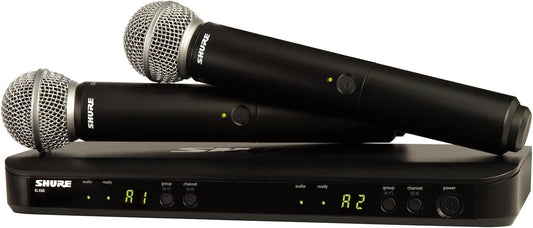
For a classroom, a small hall or a shop, a simple system gets you running quickly. The Audio-Technica System 10 ATW-1102 is a 2.4 GHz digital handheld system that selects a clear channel automatically each time it is switched on, with about 30 m of typical range and up to eight channels in use together. The Shure BLX288 dual vocal system gives two SM58 handhelds in one set, with a range of up to 100 m according to the maker.


Conference rooms, schools and houses of worship
These spaces need clear speech, reliable operation and easy battery care. The Sennheiser EW-D ME2 SET is a single-channel digital lavalier system with up to 100 m range, 1.9 ms latency and up to 90 channels in 56 MHz of tuning bandwidth. For two presenters at once, the Sennheiser EW-DX 835-S SET provides two handheld transmitters with MMD 835 capsules and a two-channel receiver, with up to 12 hours per transmitter, and the Sennheiser EW-DX MKE 2 SET gives two lavalier bodypacks with MKE 2 microphones for hands-free speakers.
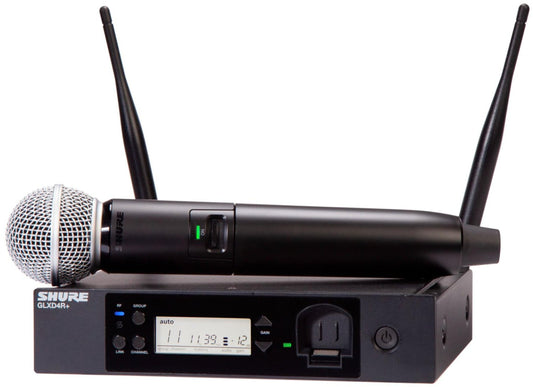
The Shure GLXD24R+ with SM58 is a digital rack system with dual-band operation that uses rechargeable lithium-ion batteries for up to 12 hours. For a preacher or teacher who moves, the Audio-Technica PRO92cW is a headworn omnidirectional condenser microphone for UniPak transmitters, weighing only 4 g with its boom.


Events, ballrooms and touring
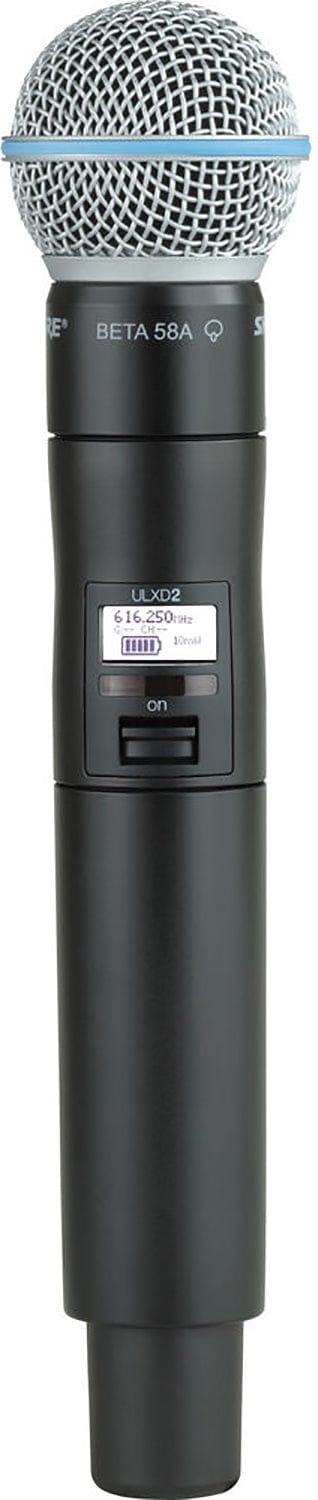
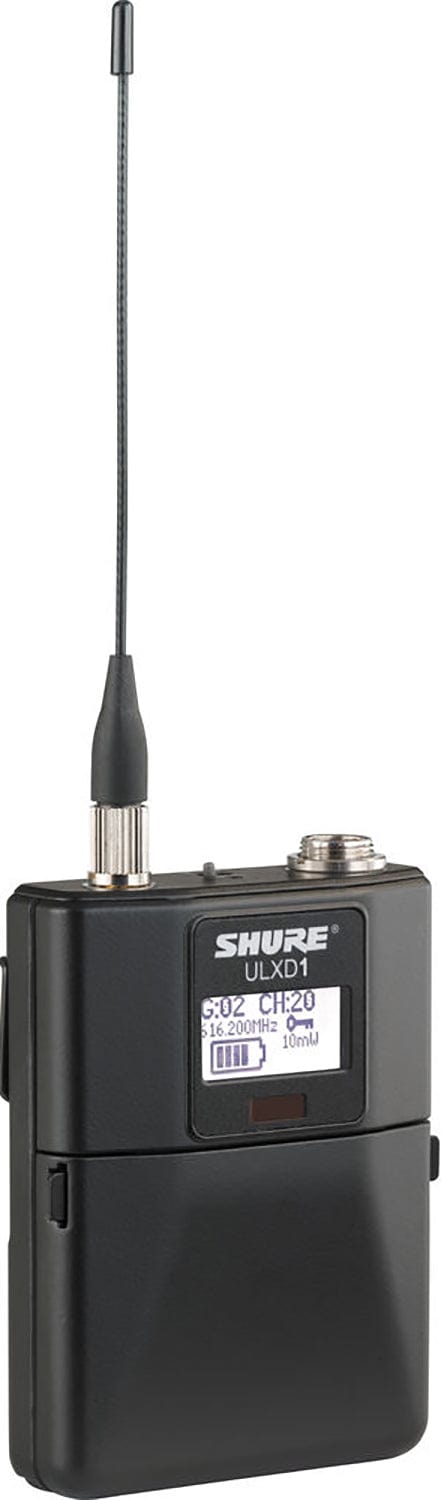
When many channels run together, choose a system with wide tuning bandwidth, rack receivers and network control. The Audio-Technica 3000 Series is a UHF true-diversity range that tunes across 60 MHz, supports up to 40 simultaneous channels per band and has a typical open-air range of 100 m. See the ATW-3212/C710 handheld system and the ATW-3211/831 lavalier system. The Shure ULX-D family is a professional digital UHF platform: the ULXD2 handheld transmitter and the ULXD1 bodypack transmitter have rugged aluminium bodies and AES 256-bit encryption for secure transmission.


Step 4: plan receivers, antennas and batteries
- Receivers: use one receiver channel per transmitter. A rack receiver, such as the Sennheiser EW-DX EM 4 DANTE with four channels, keeps many channels together and sends audio to the mixer over a network. See our Dante audio networking guide.
- Antennas: keep a clear line of sight between the transmitters and the receiver antennas, and place the antennas in the room rather than behind a rack door.
- Batteries: choose rechargeable packs for daily use and keep spares for long events. Plan about one full battery cycle for each service or session.
- Mixer: check that the mixer has enough inputs for every receiver channel. Browse our mixers.
- Monitoring: speakers must not point at the microphones, to avoid feedback. See our stage monitor guide.
Common mistakes to avoid
- Buying too few channels: count the people who speak at the same time, then add a spare.
- Ignoring the frequency band: a system must be in a band that can be used in the UAE.
- Using a 2.4 GHz system in a venue full of Wi-Fi: plan the channels, or choose a UHF system.
- Hiding the receiver: a receiver inside a closed metal rack loses range.
- No battery plan: a flat battery stops the show. Label packs and charge them after each use.
- A lavalier under a thick or noisy jacket: use a headworn microphone when the speaker moves a lot.
Key terms explained
- UHF: ultra-high frequency, the radio band used by many professional wireless microphones.
- 2.4 GHz: the licence-free band shared with Wi-Fi and Bluetooth.
- True diversity: a receiver design with two antennas and two receiver sections that picks the stronger signal.
- Bodypack: a belt-worn transmitter that connects to a lavalier or headworn microphone.
- Latency: the short delay between speaking and the signal reaching the mixer, measured in milliseconds.
- Frequency band: the range of frequencies a given system model can tune across.
- Encryption: scrambling of the wireless audio so it cannot be listened to by others.
Get the right wireless microphone system
CorporateAV.ae is an authorised dealer of Shure, Sennheiser and Audio-Technica in the UAE. Browse wireless microphones and transmitters, Audio-Technica wireless systems and Shure professional audio, or send us the venue, the number of speakers and the budget and we will recommend and quote the system.