A passive speaker has no amplifier inside and needs an external power amplifier, while an active (powered) speaker has the amplifier built in and only needs a signal and mains power. A 100 V line is a third option for large installed systems: it lets one amplifier channel feed many speakers over long cable runs.
This guide explains how passive, active and 100 V line speakers differ, when to choose each, and how to avoid the common wiring mistakes, for venues, shops, offices, schools and houses of worship in Dubai, Abu Dhabi and across the UAE.
Step 1: understand the three systems
| System | How it works | Best for |
|---|---|---|
| Passive speakers with an amplifier | A separate power amplifier drives each speaker, or a pair, over speaker cable at low impedance (for example 4 or 8 ohms). | Fixed installs where the amplifier sits in a rack, and rental rigs with a shared amplifier rack |
| Active (powered) speakers | Each speaker contains its own amplifier and usually DSP. You run a signal cable and a power cable. | Portable PA, bands, DJs, schools and small venues |
| 100 V (or 70 V) constant-voltage line | One amplifier channel feeds many speakers, each with a transformer tap that sets its power. | Shops, restaurants, offices, hotels, warehouses and campuses with many speakers |
Step 2: passive or active?
Passive speakers
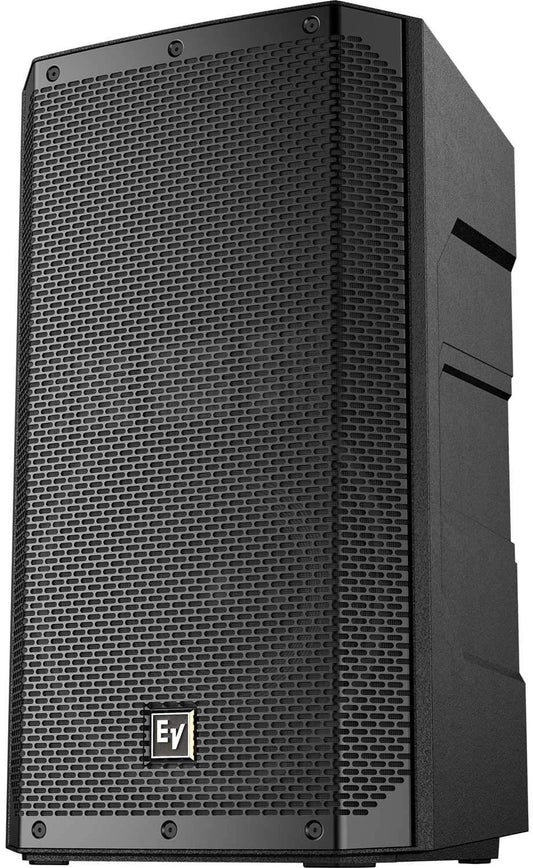
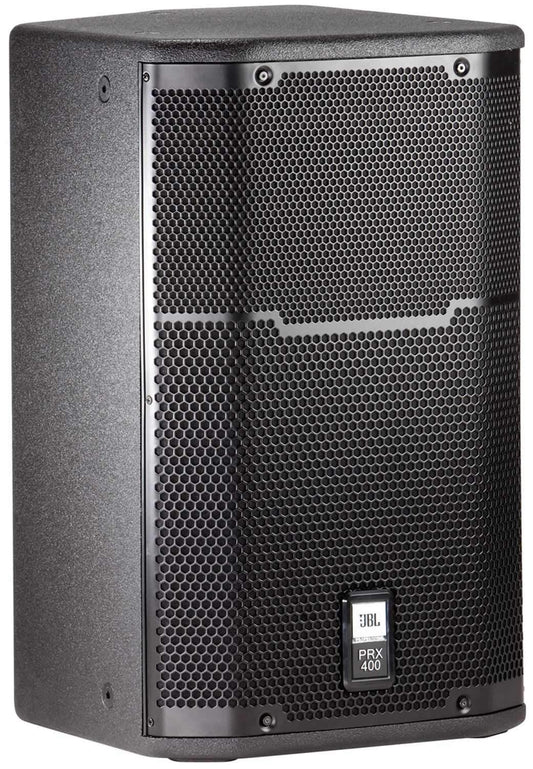
Passive speakers let you choose the amplifier and place it away from the speaker, which keeps heavy electronics out of ceilings, truss and stage wedges. The Electro-Voice ELX200-12 is a 12 inch two-way passive speaker with 95 dB sensitivity and up to 128 dB maximum output, and it runs from an external amplifier. The JBL PRX412M is a 12 inch two-way passive speaker that also works as a stage monitor, with a 50 Hz to 20 kHz range and 90 x 50 degree coverage.
The trade-off is that you must match the amplifier to the speaker: the amplifier power, the speaker impedance and the speaker power handling must agree. Wrong pairing can cause weak sound or damage. Browse our power amplifiers and the Dynacord amplifier range.


Active (powered) speakers
Active speakers are the quickest to set up because the amplifier is matched to the drivers by the maker, and the built-in DSP protects the speaker from overload. The Electro-Voice ETX 12P is a powered 12 inch two-way speaker with a 135 dB maximum output and FIR-Drive DSP, and it works as a main speaker, monitor or fill. The Electro-Voice ELX200-12SP is a 12 inch powered subwoofer with 1,200 W of Class-D power and built-in DSP presets. For a complete portable system, the JBL EON ONE MK2 is a rechargeable column PA with a built-in mixer and DSP, which suits talks, teaching and small events.
The trade-offs are weight, because each cabinet carries electronics, and cabling, because every speaker needs power as well as signal. Active speakers also cost more per cabinet, though the total system often costs less because you buy no separate amplifier.


Quick comparison
| Question | Passive | Active |
|---|---|---|
| Amplifier | Separate, you choose it | Built in |
| Cables to each speaker | One speaker cable | Signal plus mains power |
| Weight per speaker | Lighter | Heavier |
| Risk of mismatch | Higher, you must match amplifier and speaker | Low, the maker matches them |
| Best for | Installs and large rigs with amplifier racks | Portable, mobile and quick-setup use |
Step 3: when to use a 100 V line
A 100 V line (or 70 V) is a constant-voltage system. The amplifier sends a higher voltage down the cable, and each speaker has a transformer that steps it down. Because the voltage is high, the current is low, so thin cable can run a long way and one amplifier channel can feed dozens of speakers. Use it when the system has many speakers on one circuit, such as ceiling speakers in a shop, hotel corridors or a warehouse.
Low impedance (4 or 8 ohm) wiring suits a few speakers close to the amplifier, and it gives the best sound quality for music and live sound. You can read more about both in our commercial speakers and background music guide.
| 100 V line | Low impedance (4 or 8 ohm) | |
|---|---|---|
| Number of speakers per channel | Many, limited by the amplifier power | One to a few, limited by impedance |
| Cable length | Long runs with thin cable | Short runs with thicker cable |
| Speaker needs | A transformer with power taps | None |
| Typical use | Background music, paging, shops, offices, campuses | Live sound, cinemas, stage and rehearsal rooms |
Speakers with 100 V transformer taps
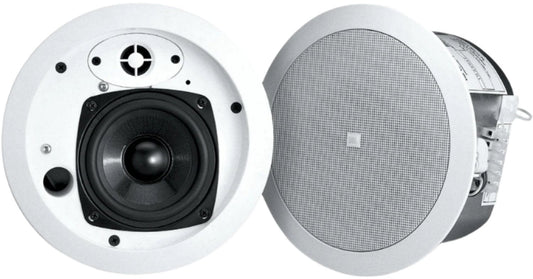
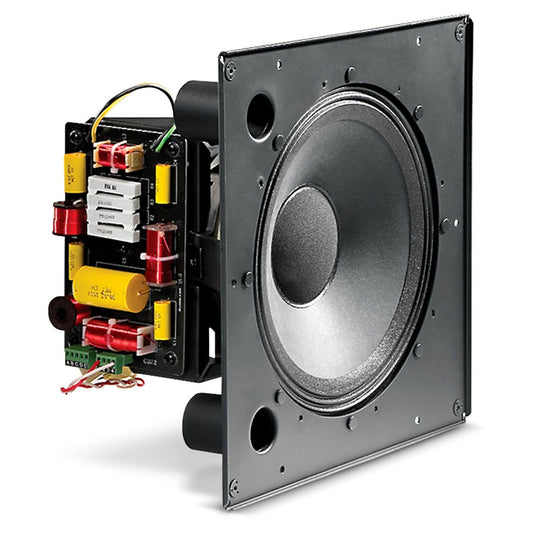
Installed speakers list their taps in watts, and you choose one tap per speaker. The JBL Control 24CT Micro Plus is a compact ceiling speaker with 70 V and 100 V taps up to 25 W. The JBL Control 227CT is a 6.5 inch coaxial ceiling speaker with 70 V / 100 V taps, and the JBL Control 322CT is a high-output 12 inch coaxial ceiling speaker with 70 V / 100 V taps for tall spaces. The Bose FreeSpace FS2C has a 2.25 inch driver, 16 W continuous power handling and 70 V / 100 V taps, sold as a pair.


Amplifiers for a 100 V line
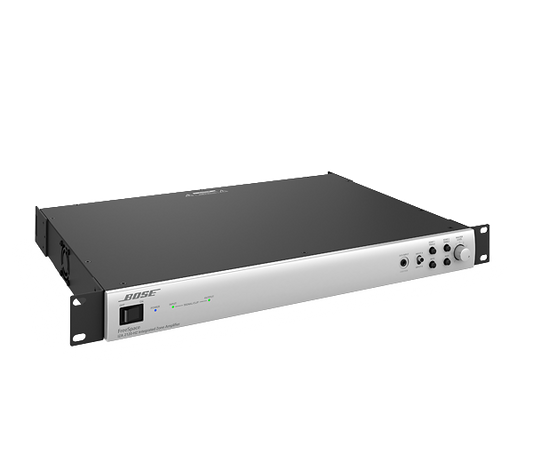
The amplifier must support the line voltage you choose. The Bose FreeSpace IZA 2120-HZ is a two-channel zone amplifier rated at 120 W per channel at 70 V and 100 V, with local controls for background music and paging. The Dynacord C1300FDi is a two-channel DSP install amplifier with 650 W per channel into 4 ohms, direct-drive 70 V / 100 V operation without a transformer, and 2, 4 or 8 ohm low-impedance operation.


A worked example
A shop has 20 ceiling speakers, and each is set to a 6 W tap. The total load is 20 x 6 W = 120 W, so the amplifier channel must be rated above 120 W at 100 V, with headroom. If the shop adds a second zone, it needs a second channel. Always add the tap power of every speaker on one line, and keep the total below the amplifier rating.
Step 4: choose by the job
| Job | Best system |
|---|---|
| Shop, restaurant or hotel background music | 100 V line with ceiling speakers and a zone amplifier |
| Warehouse, campus or car park paging | 100 V line with horn or pendant speakers |
| Band, DJ or mobile PA | Active speakers, plus an active subwoofer |
| Fixed concert or auditorium system | Passive speakers with a rack amplifier, or networked active speakers |
| Stage monitors | Passive or active wedges. See our stage monitor guide |
| Meeting room audio | Ceiling speakers with a DSP, see our ceiling microphone guide |
Common mistakes to avoid
- Mixing 70 V and 100 V: keep the amplifier and the speaker taps on the same line voltage.
- Exceeding the amplifier power: add up all the speaker taps on a line and stay below the amplifier rating.
- Connecting a low-impedance speaker to a 100 V line: a speaker without a transformer can be damaged on a constant-voltage line.
- Underpowering passive speakers: a weak amplifier pushed into clipping can damage a speaker faster than a strong one.
- Forgetting power for active speakers: every active speaker needs a mains point at its position.
- Using one zone for everything: a shop floor and a stock room usually need different levels.
Key terms explained
- Passive speaker: a speaker with no built-in amplifier.
- Active (powered) speaker: a speaker with a built-in amplifier.
- Impedance: the electrical load of a speaker, measured in ohms.
- 100 V / 70 V line: a constant-voltage speaker line that lets many speakers share one amplifier channel.
- Tap: a transformer setting that sets how many watts a speaker draws from the line.
- DSP: digital signal processing, used for crossovers, EQ and speaker protection.
- Sensitivity: how loud a speaker is for a given input power, in dB at 1 W and 1 m.
Get the right speaker system for your space
CorporateAV.ae is an authorised dealer of Electro-Voice, JBL, Dynacord and other major AV brands, and designs and installs sound systems across the UAE. Browse loudspeakers, ceiling and wall speakers, Electro-Voice and JBL Professional, see our commercial sound and PA solutions, or send us the room and we will recommend and quote the system.